Humach
How Polygrade and Humach put voice AI at the front of a warranty claim
SUMMARY
How Polygrade and Humach automated first notice of loss for United Home Warranty, live in 45 days and routing 21% fewer calls to agents.
Partner story
·
24/7
claim creation, including contract verification and dispatch triage
21%
fewer calls routed to human agents
45 days
from requirements to live customer calls
Daily
flow improvements after launch, from transcript review
The problem: the most important minute in a claim is the one nobody has automated
A warranty claim begins when a homeowner picks up the phone because something in their house has stopped working. Everything that follows (the dispatch, the diagnosis, the parts, the payment) is shaped by what gets captured in that first conversation. It is the highest-leverage moment in the entire claim and, across most of the industry, the least automated.
Legacy voice systems in this category were built to route calls, not to complete work. They can send a caller to the right queue, but they cannot look up a contract, confirm what is covered, or open a claim. Claims platforms can do all of that, but they never answer the phone. People fill the gap between the two by hand, one call at a time, which means a claim cannot start until someone is at a desk. A homeowner whose water heater fails at eleven at night waits until morning to begin, and the clock on the repair waits with them. As call volume grows, so does the manual work, and the homeowner experience suffers.
Closing that gap takes two different kinds of expertise, and very few companies have both. Humach knows what keeps a caller on the line and what makes them ask for a person. Polygrade, an AI-native claims management platform for the warranty industry, knows what has to happen inside a warranty company’s systems for a claim to actually open. A voice agent without access to the claims system can hold a convincing conversation and still end the call with a message for someone to process in the morning. A claims platform without a voice layer never reaches the homeowner at the moment the claim begins.
The two companies partnered to cover the entire interaction and proved it in a live deployment at United Home Warranty.
The solution: a voice agent that can finish the work
The project began by listening rather than by building. Polygrade and Humach analyzed United’s inbound IVR traffic together and classified every call by intent, sorting the full volume into what callers were actually trying to do. That produced a ranked view of where automation would matter most, weighing how often a call type came in against how much of the downstream claim it touched.
Claim creation, or first notice of loss, was the clear answer on both counts: high volume, highly structured, and at the front of everything else. Automating it well improves every stage that follows.
Humach built a call flow tailored to United’s existing scripts, so the automated conversation followed language the company had already refined with its own agents rather than replacing it with something generic. The Digital Voice Agent was deployed into the existing phone tree, so homeowners reached it the same way they always had. Nothing changed on the caller’s side.
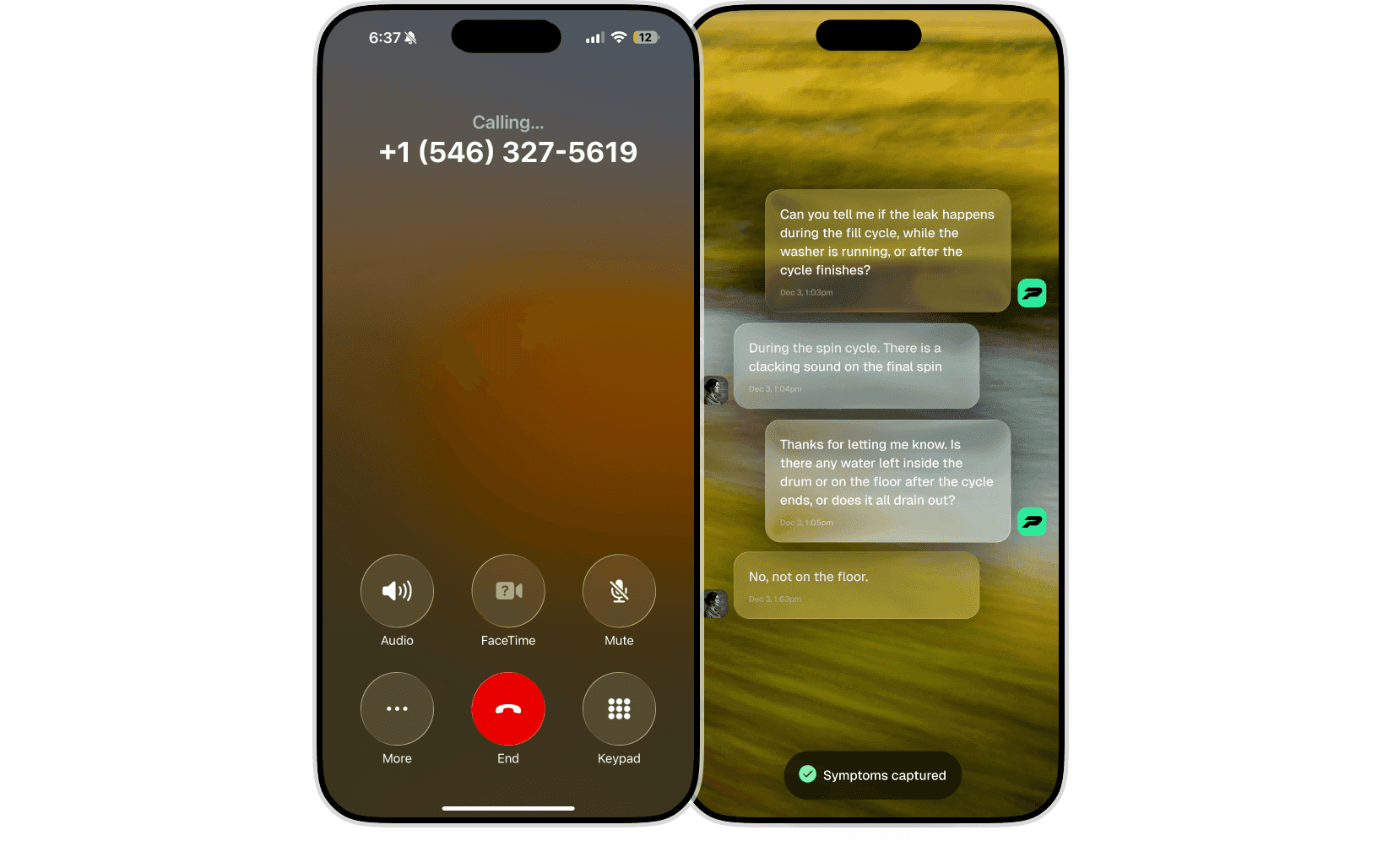
Polygrade built a Model Context Protocol layer over United’s claims management platform. That layer is what let the voice agent retrieve contract details and create a claim during the call, rather than taking a message for someone to handle later.
Humach owns the conversation, including deciding when a homeowner should speak to a person instead. Polygrade owns the work behind the conversation.
The deployment went from requirements gathering to live customer calls in 45 days, integrated into both United’s claims management platform and its IVR. Calls were monitored and automatically classified every day to find exactly where conversations were breaking down, and improvements were pushed to the voice agent roughly twice a day. Humach runs that work through its AI Whisperers, so the tuning is done by people who handle these conversations themselves.
Because Polygrade was already handling claims processing for United, the automation did not stop when the call ended. Every claim the voice agent opened automatically triggered a dispatch triage message to the homeowner. A voice agent connected to the claim itself starts the claim moving, and every stage downstream inherits cleaner information than it would get from a rushed conversation and a rekeyed note.

The results: what the deployment delivered
A digital voice agent does not keep office hours. Homeowners could open a claim at any hour, which matters most in exactly the moments warranty customers care about: a failure on a weekend or in the middle of the night. The contract was verified, the claim was created, and the dispatch triage message went out immediately, instead of the homeowner leaving a message and the process starting the next business day.
The 21% of calls that no longer reached a person were the most routine ones. That capacity moved to the thornier, higher-leverage conversations where an experienced agent actually changes the outcome, which is where a contact center’s expertise is worth the most.
Polygrade and Humach are now bringing the joint solution to other warranty companies, using the same intent analysis that identified first notice of loss to decide which call types to automate next.
Many AI projects fail, and they fail for the same reason. The digital voice agent gets built in isolation from the systems that do the actual work. Humach took the time to really understand the current processes and then developed a digital agent that mirrors how a live agent would handle a call, including empathy, and we built it in just a few weeks. Humach handles the conversation, and Polygrade handles the claim. Together, we delivered a superior solution that neither of us could have delivered alone.
Tim Houlne
Founder and CEO, Humach
Humach has been doing this since 1988, and it shows in how they work. They tune this agent every single day. That is the same standard we hold ourselves to on the claims side, and you can feel it in a partnership when both sides are actually committed to getting it right.
David Steckel
Founder and CEO, Polygrade
About
Humach
Humach (humans + machines) is redefining customer engagement, sales, and support. By blending the expertise of human contact center agents with machine learning and AI-powered digital agents, Humach provides businesses with unparalleled customer experiences and streamlined transactions. With more than 35 years of experience helping Fortune-sized and emerging growth businesses alike, Humach aims to transform the way businesses of all sizes engage, acquire, and support their customers.